On a recent project near the Mississippi River levee, we tested soil samples from a 15-foot-deep excavation for a new commercial building. The contractor needed quick turnaround on shear strength parameters to finalize footing design. In Baton Rouge, where alluvial soils dominate, the direct shear test is often the go-to method for determining friction angle and cohesion. We ran the test on undisturbed samples from three strata, including the soft clay layer typical of the floodplain. Results confirmed a friction angle of 28 degrees and cohesion of 0.3 ksf, which allowed the structural engineer to proceed with confidence. For deeper foundations, we often combine this with a CPT sounding to get continuous strength profiles, especially where sand lenses are suspected.
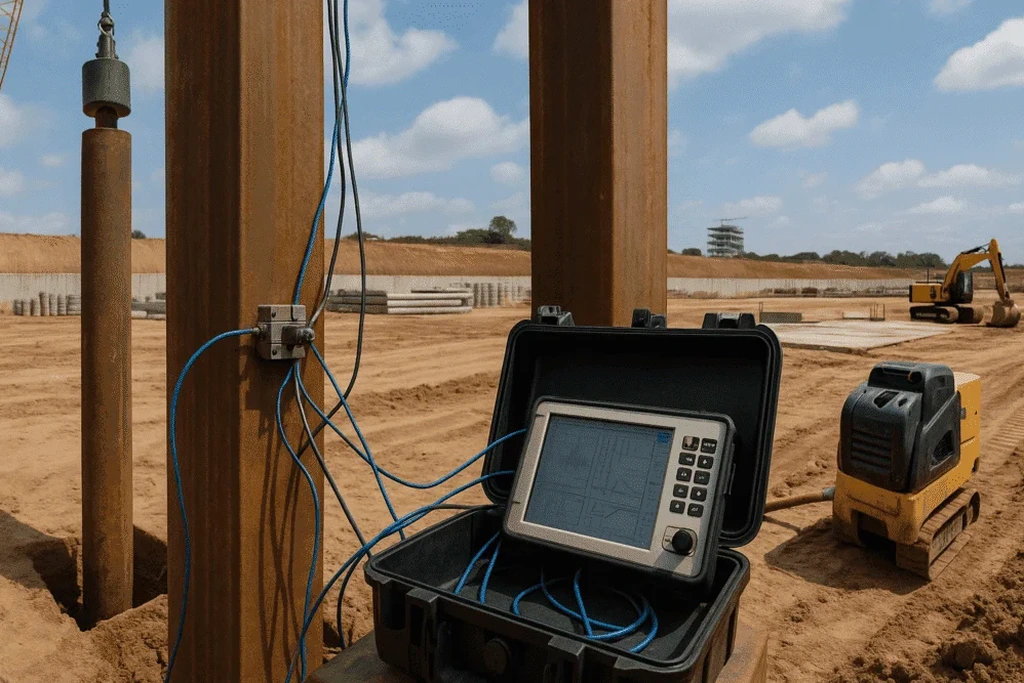
The direct shear test gives engineers friction angle and cohesion values that directly feed into bearing capacity and slope stability calculations.
Method and coverage
Regional considerations
Baton Rouge sits on deep alluvial deposits of the Mississippi River, with soft clays and silts extending over 100 feet in places. Groundwater is often encountered at 5 to 10 feet depth, saturating the soil and reducing effective stress. If shear strength is overestimated, foundations can suffer excessive settlement or even bearing failure. In one case, a parking garage slab cracked because the design assumed a friction angle of 32 degrees, but the actual direct shear test gave 26 degrees. The difference meant the slab needed additional reinforcement. That's why we insist on site-specific testing for every project, not published correlations.
Standards that apply
ASTM D3080-18 – Standard Test Method for Direct Shear Test of Soils Under Consolidated Drained Conditions, ASTM D2487-17 – Standard Practice for Classification of Soils for Engineering Purposes (Unified Soil Classification System), ASTM D2216-19 – Standard Test Method for Laboratory Determination of Water (Moisture) Content of Soil and Rock by Mass, IBC 2021 – Section 1806 (Presumptive Load-Bearing Values of Soils) – requires local shear strength data
Associated technical services
Consolidated Drained (CD) Direct Shear
For slow loading conditions like embankments and retaining walls. We saturate and consolidate the specimen before shearing at controlled rate. Typical for clay and silt layers in Baton Rouge.
Consolidated Undrained (CU) Direct Shear
Simulates rapid loading on saturated soils, such as during earthquake or flood events. Pore pressure is not allowed to dissipate. Used for temporary excavations and slope stability.
Residual Shear on Pre-sheared Specimens
Measures the fully softened strength after large displacement. Critical for analyzing existing landslides or slip surfaces in the Baton Rouge area, where old river channels create weak planes.
Typical parameters
Common questions
How much does a direct shear test cost in Baton Rouge?
The typical range for a direct shear test in Baton Rouge is between US$550 and US$710 per specimen, depending on the number of normal stress levels and whether the test is CD or CU. Volume discounts apply for multiple specimens from the same project.
What is the difference between direct shear and triaxial shear?
Direct shear is simpler and faster, giving friction angle and cohesion under plane strain conditions. Triaxial provides more control over drainage and measures stress-strain behavior under axisymmetric loading. For routine projects in Baton Rouge, direct shear is often sufficient for shallow foundations and retaining walls.
How long does it take to get direct shear test results?
A standard CD direct shear test takes 5 to 7 business days from sample receipt, including specimen preparation, saturation, consolidation, and shearing. CU tests are faster, typically 3 to 4 days. Rush service is available for an additional fee.