In Baton Rouge, we see many projects where conventional SPT data just doesn't capture the full picture. The Mississippi River floodplain deposits here are heterogeneous — lenses of sand, silt, and clay stacked in unpredictable ways. That's why we rely on the Ménard pressuremeter test (PMT) to obtain a direct measurement of the soil's deformation modulus and limit pressure. This test inflates a cylindrical probe down the borehole, giving us a stress-strain curve that reflects the actual in-situ behavior. It's especially useful when designing for heavy bridge abutments or high-rise foundations along the river corridor. We combine this with a geotechnical instrumentation plan to monitor long-term performance.
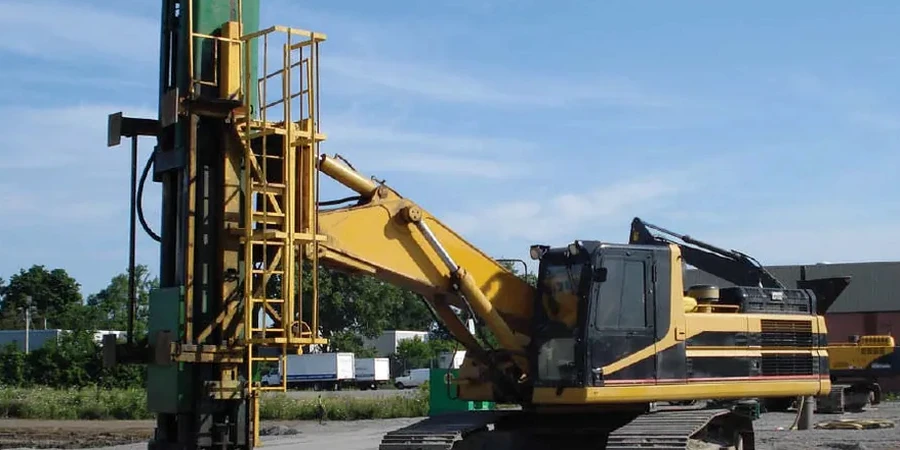
In Baton Rouge's alluvial soils, PMT delivers the real deformation modulus — not a correlation, but a direct measurement from the ground itself.
Method and coverage
Regional considerations
The high humidity and frequent rainfall in Baton Rouge can soften the borehole walls before the probe is inserted, leading to artificially low limit pressures. We mitigate this by using a rotary drilling technique with minimal water circulation and inserting the probe within 5 minutes of completing the borehole. Another risk is the presence of shell fragments or gravel layers common in the Pleistocene terraces east of the city — these can puncture the probe membrane. We pre-screen with a careful log of the borehole cuttings and adjust the test interval to avoid those zones. Without proper execution, the PMT results would underestimate the true soil strength, potentially overdesigning foundations by 20% or more.
Standards that apply
ASTM D4719-20 (Standard Test Methods for Prebored Pressuremeter Testing in Soils), IBC 2021 (Chapter 18: Soils and Foundations), ASCE 7-22 (Minimum Design Loads and Associated Criteria for Buildings and Other Structures)
Associated technical services
Prebored PMT (ASTM D4719)
Standard Ménard pressuremeter test performed in pre-drilled boreholes. We use a wireline system to maintain borehole stability in the soft Baton Rouge clays. Results include EM, pL, and creep pressure. Suitable for depths up to 30 m.
Self-Boring Pressuremeter (SBPMT)
For sensitive alluvial deposits where disturbance must be minimized. The self-boring probe advances into the ground without pre-drilling, preserving the in-situ stress state. Ideal for modulus profiling in the upper 15 m of the Mississippi River floodplain.
PMT for Foundation Design
We use PMT results to calculate bearing capacity and settlement for shallow foundations, piles, and drilled shafts. The Ménard pressuremeter method (MPM) is directly applicable to Baton Rouge's layered soil profiles. We provide design parameters in a clear report.
Pressuremeter Calibration
We calibrate all probes in our Baton Rouge laboratory using a triaxial cell to ensure membrane stiffness corrections are accurate. Calibration certificates are provided with each test. We also offer on-site verification of third-party equipment.
Typical parameters
Common questions
How does the Ménard pressuremeter test differ from the SPT?
The SPT measures resistance to dynamic penetration, giving a blow count (N-value) correlated to relative density or consistency. The PMT measures a stress-strain response under controlled expansion, yielding a direct deformation modulus (EM) and limit pressure (pL). In Baton Rouge, the PMT is preferred for settlement analysis because it captures the nonlinear stiffness of soft clays and loose sands.
What is the typical cost range for a PMT in Baton Rouge?
For a standard prebored PMT at one depth, the cost typically ranges between US$1.090 and US$1.360. This includes mobilization within the Baton Rouge area, borehole preparation, probe insertion, data acquisition, and a summary report. Costs increase with depth, number of tests, or if self-boring equipment is required.
At what depths is the PMT most reliable in Baton Rouge soils?
The PMT is reliable from about 1 m to 30 m depth. In Baton Rouge, the most useful data often comes from the 3 m to 15 m range, where the alluvial clays and silty sands transition into the Pleistocene terrace deposits. Below 30 m, borehole wall stability becomes challenging, and other methods like CPT may be more practical.
Can PMT results be used for seismic design in Baton Rouge?
Yes, but indirectly. The PMT provides modulus and strength parameters that feed into site response analysis (e.g., SHAKE). For direct shear wave velocity (Vs) profiles, we recommend combining PMT with MASW or downhole seismic tests. The PMT-derived EM can be correlated to small-strain shear modulus (G0) using empirical relationships, but those correlations have higher uncertainty.