The geology beneath Baton Rouge is dominated by Mississippi River alluvial deposits — layers of silty sands, plastic clays, and occasional organic peat that extend dozens of meters deep. The water table typically sits only 1.5 to 3 meters below grade, which directly governs sheet pile wall design choices. In this setting, a cantilevered or anchored sheet pile system must resist both lateral earth pressures and hydrostatic loads that fluctuate with river stage. Before finalizing the wall embedment depth, we often run a CPT sounding to map stratigraphy continuously, or a SPT boring when we need split-spoon samples for classification. These field data feed into our limit-equilibrium and finite-element models, ensuring the driven pile length and section modulus match the actual ground conditions along the Louisiana capital's floodplain.
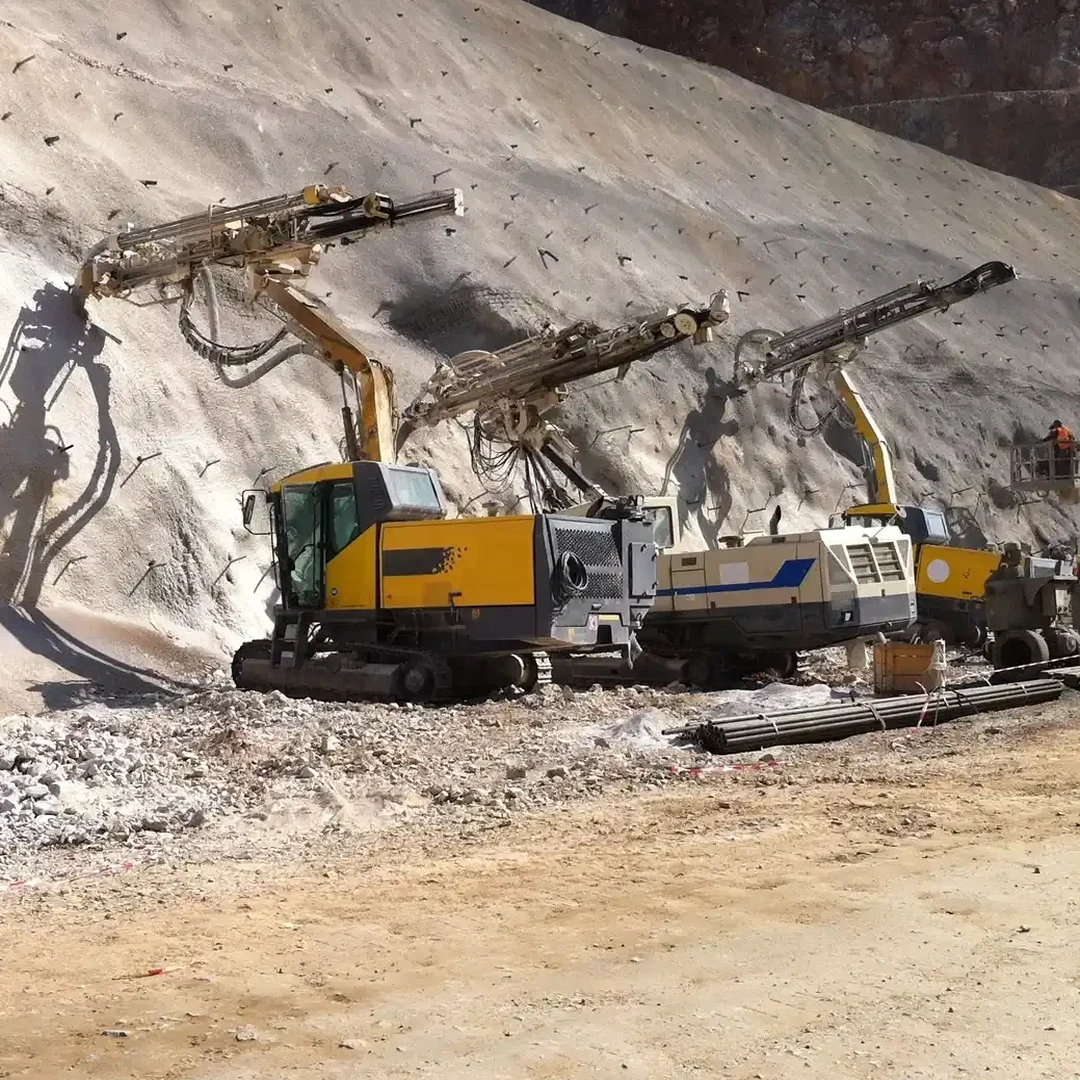
A site-specific boring log can change the required pile section modulus by 40 percent in Baton Rouge's variable alluvium, which means lower cost and safer performance.
Method and coverage
- Stratigraphic interpretation from continuous sampling
- Lateral earth pressure computation per Coulomb or Rankine theory
- Hydrostatic uplift and seepage analysis tied to river stage records
- Structural check of pile section modulus in bending
Regional considerations
The biggest risk we flag on Baton Rouge sheet pile projects is underestimating the hydrostatic head after a heavy rain or during the high-water season on the Mississippi. A wall designed for a 2-meter differential head can suddenly see 4 meters if the drainage blanket clogs or the weep holes are undersized. We've seen walls rotate at the toe because the passive resistance in soft clay was computed with an undrained strength that was too optimistic. That is why we always cross-check the stability of the excavation using a total-stress analysis for short-term conditions and an effective-stress analysis for the long-term drained case. The key is to treat the water table as a variable, not a constant, especially in a deltaic environment like south Louisiana.
Standards that apply
ASCE 7-22 (minimum design loads, including flood and ice), IBC 2018 (seismic design category and site classification), ASTM D1586-18 (standard for SPT in soil), FHWA-NHI-05-083 (design of sheet pile walls)
Associated technical services
Cantilever wall design
For excavations up to about 4 meters deep, we design cantilevered sheet pile walls using the free-earth support method. We compute the required embedment depth and select the lightest section that satisfies rotational equilibrium and deflection limits.
Anchored wall design
When the retained height exceeds 4 meters or lateral loads are high, we design single- or multi-level anchored systems. We size the anchor tendons, bond lengths, and waler beams, and verify that the anchor capacity is compatible with the soil stratigraphy encountered.
Cofferdam and flood-wall design
For temporary or permanent water-retaining structures, we design interlocking sheet pile cells or combi-walls. We evaluate seepage, piping, and uplift stability using flow nets and consider the effect of river stage fluctuations on the overall factor of safety.
Typical parameters
Common questions
What soil conditions affect sheet pile wall design in Baton Rouge?
The Mississippi River alluvium ranges from loose silty sands to very soft clays (Su = 15–60 kPa). Organic peat layers are common near the surface. The key is to identify the depth and thickness of the competent sand layer that provides passive resistance and anchor capacity. We use CPT and SPT logs to map these units.
How much does sheet pile wall design cost in Baton Rouge?
For a typical commercial or residential project in the Baton Rouge area, the design fee for sheet pile wall analysis and documentation ranges between US$1.620 and US$5.740, depending on wall height, number of anchor levels, and whether a full FEM model is needed. This includes the geotechnical interpretation and structural checks.
How does the high water table affect the wall design?
The water table in Baton Rouge is usually 1.5–3 m deep but can rise to within 0.5 m of the surface after heavy rains or during high river stages. The design must include hydrostatic pressure on both the active and passive sides, plus uplift on the wall toe. We recommend a drainage system behind the wall to reduce long-term water pressure.