Baton Rouge sits on a complex mix of Pleistocene terraces and Holocene floodplain deposits, so the difference between a site near the Mississippi River levee and one closer to the Comite River can be dramatic. Downtown often hits stiff clay within a few meters, but the low-lying areas toward the Amite River basin regularly encounter thick layers of organic silt and peat. In our experience, these organic soils require a completely different approach to characterization. Standard penetration tests alone don't capture the long-term settlement behavior. That is why we always combine field sampling with a detailed consolidation analysis to predict creep under sustained loads, and we cross-reference those results with silty soil classification to separate true peat from highly organic clay.
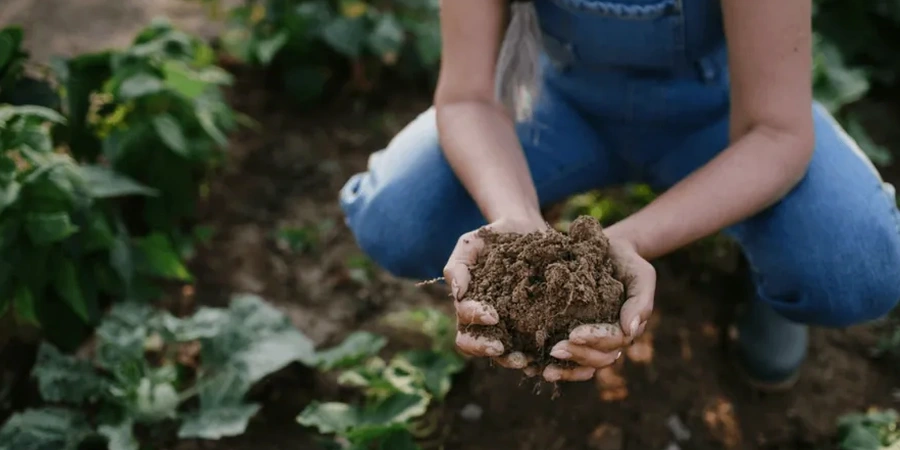
For Baton Rouge organic soils, natural water content often exceeds 200 percent, and ignoring secondary compression can lead to decades of differential settlement.
Method and coverage
Regional considerations
ASCE 7-22 and the IBC require site-specific geotechnical investigations for any structure in a floodplain or on soft ground, which covers most of Baton Rouge's organic soil zones. The biggest risk is not the short-term bearing capacity but the long-term secondary compression. A building may settle uniformly for the first two years and then start to creep differentially for decades. We have seen slab-on-grade homes in the Sherwood Forest area develop 4 to 6 inches of total settlement over 15 years because the organic layer was never identified. Our lab work quantifies that risk so the structural engineer can choose a foundation system that isolates the building from the organic zone or improves the soil to reduce long-term movement.
Standards that apply
ASTM D2974 (moisture, ash, and organic matter), ASTM D2435 (one-dimensional consolidation), ASTM D2573 (field vane shear in soft soils), ASCE 7-22 (minimum design loads, site class definition), IBC 2021 Chapter 18 (soils and foundations)
Associated technical services
Laboratory Characterization of Organic Soils
Full suite of index and consolidation tests including loss on ignition, natural water content, fiber content, and incremental consolidation with secondary compression monitoring. We report Cc, Cα, and preconsolidation pressure.
Field Investigation and Sampling
Thin-walled tube sampling and field vane shear testing in soft organic layers. We also perform piezocone (CPTu) soundings to map the lateral extent of peat pockets across large sites.
Settlement Analysis and Mitigation Recommendations
We compute total and differential settlement estimates for shallow and deep foundations, and recommend Improvement techniques such as preloading, vertical drains, or lightweight fills.
Typical parameters
Common questions
What makes organic soils in Baton Rouge different from typical mineral soils?
Organic soils in Baton Rouge have very high natural water content, often exceeding 200 percent, and they undergo significant secondary compression (creep) for decades after loading. Unlike stiff clays or sands, they can lose volume slowly over time, causing differential settlement in structures built directly on them. Our lab tests specifically measure the compression index Cc and the secondary compression coefficient Cα to quantify this behavior.
How much does organic soil management testing cost in Baton Rouge?
For a standard residential lot with 2 to 3 test pits and a full lab suite, the cost typically ranges between US$730 and US$2,510 depending on the number of consolidation tests and the depth of sampling. Larger commercial sites with multiple CPTu soundings and advanced creep analysis fall at the higher end of that range.
Can I build a slab-on-grade house on organic soil in Baton Rouge?
It is possible if the organic layer is thin and the slab is post-tensioned, but we strongly recommend removing and replacing the organic material or using a deep foundation system. Our lab data helps the engineer decide whether a stiffened slab, a pile-supported raft, or Improvement like preloading with vertical drains is the most cost-effective solution for your specific site.