Baton Rouge sits on thick Pleistocene and Holocene alluvial deposits from the Mississippi River, with groundwater typically 3 to 6 feet below grade. These loose, saturated sands are prone to liquefaction during moderate seismic events, especially in areas like the Comite River floodplain. We perform soil liquefaction analysis using the SPT-based simplified procedure from Youd-Idriss (2001) to calculate factor of safety against liquefaction. Each site gets a site-specific response spectrum per ASCE 7-22, with NEHRP site class determined from measured Vs30 or corrected blow counts. Our team has evaluated dozens of parcels across the capital region, from Perkins Rowe to the industrial corridor along the river.
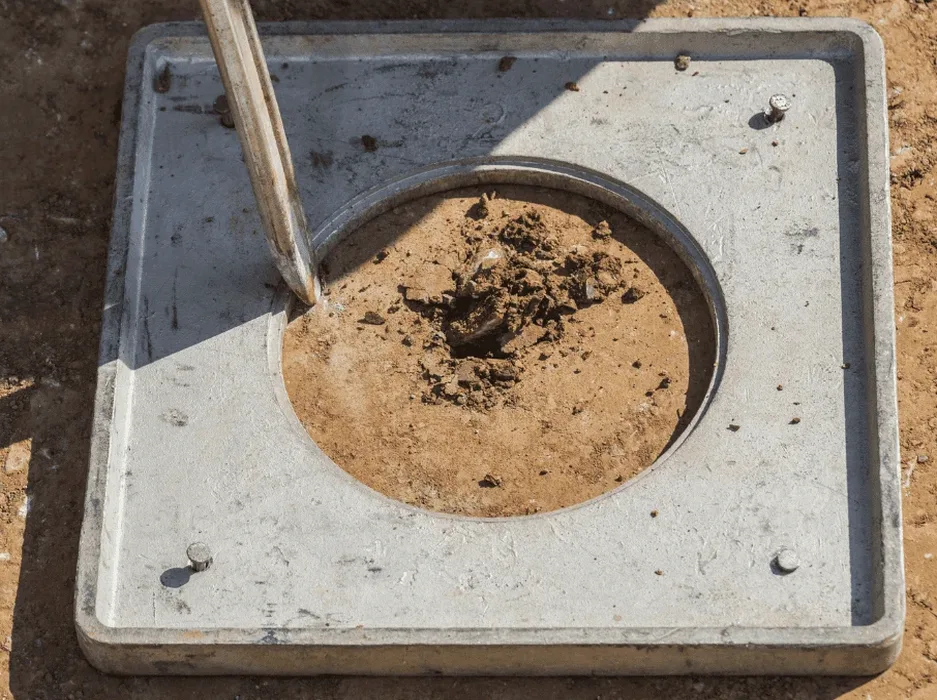
For Baton Rouge sites with shallow water table, the factor of safety against liquefaction often falls below 1.0 at depths of 10 to 25 feet.
Method and coverage
- Standard Penetration Test per ASTM D1586-18 with hammer energy calibration
- Grain size distribution and Atterberg limits per ASTM D6913 and D4318
- Cyclic stress ratio (CSR) vs cyclic resistance ratio (CRR) comparison
- Post-liquefaction settlement estimates using Tokimatsu-Seed method
Regional considerations
We deploy a CME-55 automatic hammer on a track-mounted drill rig for SPT sampling across Baton Rouge. The rig reaches depths of 80 feet in most alluvial soils, collecting split-spoon samples every 5 feet for a continuous soil liquefaction analysis log. One challenge in this city is the presence of silty clay interbeds that mask liquefiable sand layers. To avoid false negatives, we also run a portable seismic cone (CPTu) for pore pressure dissipation tests on the same day, confirming the stratigraphy before the borehole collapses. This dual approach has flagged hidden liquefaction zones on three recent projects near the airport.
Process video
Standards that apply
NCEER 1997 (Youd-Idriss) for SPT-based liquefaction triggering, ASCE 7-22 Section 11.8 (Seismic Site Class), ASTM D1586-18 (Standard Penetration Test), ASTM D2487-17 (Unified Soil Classification)
Associated technical services
Cyclic Triaxial Testing
Undisturbed samples are consolidated to in-situ stresses and cyclically loaded to measure pore pressure build-up and strain. Results calibrate the CRR curve for fines-rich silty sands common in East Baton Rouge Parish.
Vs30 Shear Wave Velocity Survey
We deploy a 24-channel MASW array to measure average vs30/" data-interlink="1">shear wave velocity in the top 100 feet. This data directly determines NEHRP site class (C, D, or E) for liquefaction screening and building code compliance.
Typical parameters
Common questions
What methods does your Baton Rouge lab use for soil liquefaction analysis?
We follow the NCEER 1997 simplified procedure using SPT blow counts corrected for rod length, hammer energy, and overburden stress. For critical sites, we also perform cyclic triaxial tests on undisturbed samples to determine the cyclic resistance ratio directly.
How much does a soil liquefaction analysis cost in Baton Rouge?
For a standard residential or small commercial site, the cost ranges between US$2,340 and US$4,620. This includes 3 to 5 SPT borings, lab testing, and a report with factor of safety plots and settlement estimates. Larger projects or those requiring MASW surveys cost more.
What depth should borings reach for liquefaction assessment?
Borings should extend at least 30 feet below the foundation bearing depth, or until refusal in dense sand or clay. In Baton Rouge, we typically drill to 50 feet because the liquefiable layers often lie between 10 and 30 feet below grade.
Do you include post-liquefaction settlement in your reports?
Yes. We calculate vertical settlement using the Tokimatsu-Seed (1987) method for dry sand and the Ishihara-Yoshimine (1992) method for saturated conditions. The report provides settlement contours at 0.5-inch intervals across the site.
How long does the analysis take from field work to final report?
Field drilling takes 1 to 2 days depending on access. Lab testing and data processing add another 5 to 7 business days. We can expedite to 3 days for an additional fee if the project schedule is tight.