The alluvial plain beneath Baton Rouge consists of interbedded silts, clays, and fine sands deposited by the Mississippi River over millennia. These soils are typically unsaturated above the water table, which sits between 10 and 25 feet deep depending on season and location. When we analyze unsaturated soils in Baton Rouge, we measure matric suction and hydraulic conductivity under controlled conditions. This is critical because partially saturated clays exhibit apparent cohesion that vanishes upon wetting. For projects involving shallow foundations or cut slopes, we often combine this analysis with a placa de carga to verify bearing capacity under actual moisture conditions.
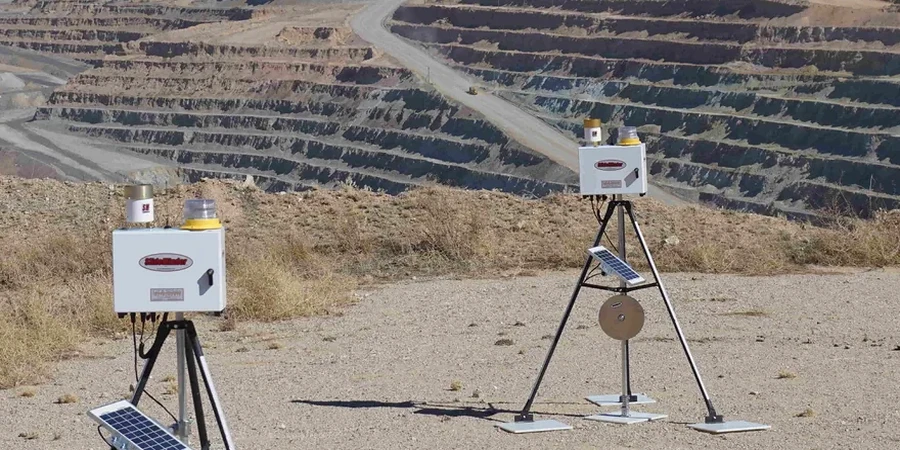
Unsaturated soils in Baton Rouge can lose 50% of apparent cohesion after heavy rainfall, a key factor in shallow slope failures along the bluff line.
Method and coverage
Regional considerations
We use pressure plate extractors and volumetric pressure cells to run unsaturated soil analysis on Baton Rouge samples. The equipment applies controlled air pressure to force water out of the specimen while monitoring volume change. A major risk during testing is cavitation in the ceramic disc or membrane leakage, which invalidates suction readings. We prevent this by using high-air-entry discs rated for 5 bar and checking saturation daily. On site, the risk lies in sample disturbance during extraction from plastic clays. A disturbed sample gives unreliable SWCC data, so our field crews use thin-walled Shelby tubes with a fixed piston to minimize deformation.
Standards that apply
ASTM D6836 (SWCC determination), ASTM D5298 (filter paper suction), ASTM D7181 (triaxial with controlled suction)
Associated technical services
Soil-Water Characteristic Curve Testing
Full SWCC with 10 to 15 data points using pressure plate or dewpoint methods. Van Genuchten parameters provided for numerical modeling.
Unsaturated Shear Strength Testing
Triaxial CU tests with controlled matric suction. We report c', φ', and φᵇ for use in slope stability and foundation design.
Hydraulic Conductivity (Unsaturated)
Instantaneous profile or steady-state method on undisturbed samples. Covers the full suction range from near-saturation to residual conditions.
Field Suction Monitoring
Installation of tensiometers and gypsum blocks for in-situ matric suction tracking. Data logging over multiple wet-dry cycles for real-time assessment.
This service complements our laboratory testing work for a complete project analysis.
Typical parameters
Common questions
Why is unsaturated soil analysis important for Baton Rouge construction?
The reference range for this service in Baton Rouge is US$990 - US$3.470. The final price depends on the project scope and volume.
What is the typical cost range for unsaturated soil testing in Baton Rouge?
A full SWCC with triaxial testing for unsaturated shear strength typically ranges between US$1,850 and US$3,470 per sample. The price depends on the number of suction stages and testing duration. Contact us for a quote specific to your project scope.
How long does unsaturated soil testing take?
A standard SWCC with 10 data points takes 3 to 4 weeks due to equilibration time at each suction step. If we include unsaturated triaxial testing, expect 5 to 7 weeks total. We can prioritize rush projects with reduced suction stages.
Do you follow ASTM standards for unsaturated soil testing?
Yes. We test under ASTM D6836 for the SWCC, ASTM D5298 for filter paper suction, and ASTM D7181 for triaxial testing with controlled suction. Our lab holds ISO 17025 accreditation for these methods.