Many Baton Rouge contractors assume that standard penetration resistance alone is enough to size shallow foundations. That shortcut can lead to over-designed footings or, worse, unexpected differential settlement. The Mississippi River floodplain deposits soft clay and loose sand layers that vary within a single building footprint. A plate load test (PLT) directly measures bearing capacity and immediate settlement under a simulated footing load. It captures the actual soil response at the exact depth of the foundation. Without this in-situ check, you are guessing at the modulus of subgrade reaction. In Baton Rouge, where highly plastic clays dominate the subsurface, a PLT provides the load-settlement curve needed for rational design. Pairing PLT results with a geotechnical study that includes Atterberg limits and natural moisture content gives the design team a complete picture of how the soil will behave under service loads.
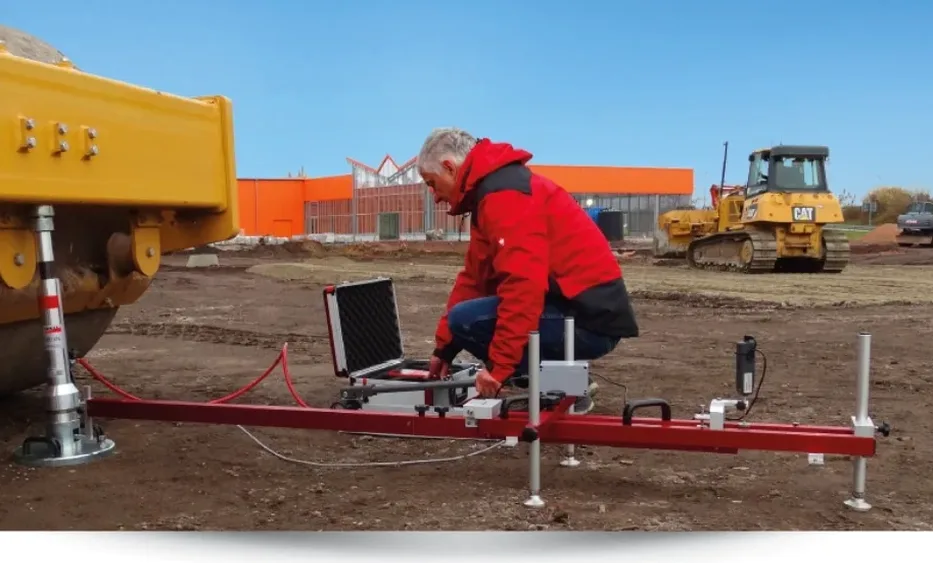
A single plate load test in Baton Rouge can reveal whether the assumed bearing capacity of 2,000 psf is safe or needs adjustment.
Method and coverage
Regional considerations
IBC 2021 and ASCE 7 require that foundation bearing capacity be verified by approved methods. In Baton Rouge, the seismic design category ranges from B to D depending on site soil class. The plate load test directly supports the soil bearing pressure used in structural calculations. Relying solely on empirical correlations from N-values can underpredict settlement in the soft clay layers that underlie much of the city. The risk is not just structural — it is financial. Over-design adds thousands in concrete and steel. Under-design leads to cracked slabs and litigation. The plate load test in Baton Rouge gives the engineer a site-specific data point that no table or correlation can replace. ASTM D1194 requires that the test plate be at least six times the maximum aggregate size of the base material, which is straightforward for the clean sands and crushed stone used locally.
Standards that apply
ASTM D1194-18 (Standard Test Method for Bearing Capacity of Soil for Static Load and Spread Footings), ASTM D1195-18 (Standard Test Method for Repetitive Static Plate Load Tests of Soils), IBC 2021 Chapter 18 (Soils and Foundations)
Associated technical services
Static Plate Load Test (ASTM D1194)
Incremental loading in 10% steps of estimated capacity, held until settlement stabilizes. Suitable for footing design for commercial buildings, retaining walls, and tower bases.
Cyclic Plate Load Test (ASTM D1195)
Repetitive loading cycles to evaluate elastic and plastic settlement under repeated traffic or machinery loads. Used for pavement subgrade evaluation and crane pads.
Modulus of Subgrade Reaction (k-value) Determination
From the load-settlement curve we derive the secant modulus at design bearing pressure. This k-value is input directly into structural design software for mat foundations and slabs-on-grade.
Typical parameters
Common questions
What size plate is used for a plate load test in Baton Rouge?
Standard plate diameters are 12, 18, and 24 inches. The 24-inch plate is most common for shallow footing design because it better represents the actual footing size. The test pit is excavated to the proposed bearing elevation, usually 3 to 5 feet deep in Baton Rouge.
How does the high water table in Baton Rouge affect the PLT results?
The water table typically sits 3 to 8 feet below grade. If the test elevation is near or below the water table, the soil is weaker and settlement increases. The technician must document whether drainage is provided or if the test is performed under undrained conditions. The bearing capacity reported accounts for these conditions.
How long does a plate load test take from mobilization to report?
Field testing takes 4 to 8 hours per test point. The lab processes the data and issues a report within 48 hours. For large projects with multiple test locations, the total field time can extend to two days. We coordinate with the general contractor to avoid delays.
Is a plate load test required by the Louisiana building code?
IBC 2021 and the Louisiana State Uniform Construction Code allow alternative methods for bearing capacity determination. The plate load test is the most direct method and is commonly required by structural engineers for projects with high column loads or sensitive settlement criteria. It satisfies the code requirement for approved soil bearing values.