Baton Rouge grew fast along the Mississippi River, and with that growth came the challenge of building on young alluvial deposits. The city's floodplain history means thick layers of soft clay and silt lie beneath much of the developed area. In our experience, the flat dilatometer test is one of the most reliable ways to profile these compressible soils without the disturbance you get from drilling. Before designing deep foundations or assessing settlement, we often run a DMT to get a continuous read on stiffness and stress history. That information feeds directly into decisions about pile foundation design and shallow foundation bearing capacity for the structures planned here.
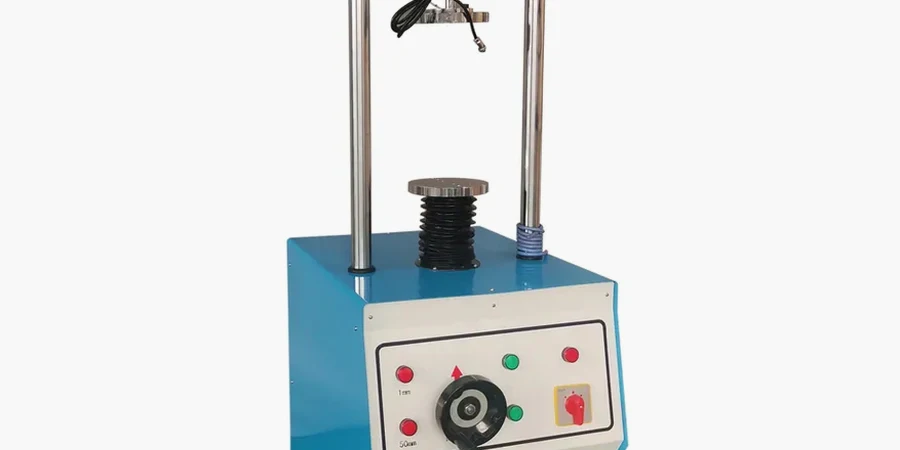
In soft Baton Rouge clays, the DMT often detects overconsolidation ratios that SPT logs miss entirely.
Method and coverage
Regional considerations
Compare the Garden District with the industrial corridor along the river. The Garden District sits on older, more consolidated terrace deposits, while the river corridor has recent silts and clays with high compressibility. A DMT in the latter will show low dilatometer moduli and high horizontal stress indices, signaling a risk of significant long-term settlement under load. If you skip this test, you might overestimate stiffness and under-design your foundation. We've seen cases where a building pad designed using only SPT N-values settled three times more than predicted. The flat dilatometer test catches those differences by measuring lateral stress directly, which is the missing piece in many Baton Rouge projects.
Standards that apply
ASTM D6635-15, ASTM D1586-18, ASCE 7-22 (Chapter 20, Site Classification)
Associated technical services
DMT profiling for settlement analysis
Continuous measurement of constrained modulus (M) and overconsolidation ratio (OCR) in soft Baton Rouge clays. We provide settlement estimates using the DMT-derived modulus, calibrated against local consolidation test data.
DMT for lateral earth pressure and slope stability
Evaluation of horizontal stress index (Kd) to assess at-rest earth pressure coefficients. Useful for retaining wall design and stability checks in the riverfront industrial areas.
This service complements our laboratory testing work for a complete project analysis.
Typical parameters
Common questions
How deep can the flat dilatometer test reach in Baton Rouge soils?
In most Baton Rouge alluvial deposits, the DMT can reach depths of 30 to 35 meters (100–115 feet) before refusal. The penetration limit depends on the density of the sand layers and the consistency of the clays. For very stiff clays or dense sands, we switch to a heavier cone truck or pre-drill the upper crust.
What is the difference between DMT and CPT for Baton Rouge projects?
Both are in-situ tests, but they measure different properties. CPT gives tip resistance and sleeve friction, which correlate well with soil type and strength. DMT measures horizontal stress and modulus directly, which is more sensitive to stress history and stiffness. For Baton Rouge's overconsolidated clays, DMT often provides a better estimate of settlement magnitude than CPT alone.
How much does a flat dilatometer test cost in Baton Rouge?
A typical DMT sounding in Baton Rouge ranges from US$960 to US$1,040 depending on depth, access conditions, and number of test points. This includes mobilization, field execution, data reduction, and a summary report. For large projects with multiple soundings, the per-point cost decreases.