Many contractors in Baton Rouge assume the Mississippi River silt is uniform. That assumption leads to oversized drainage and unnecessary foundation costs. We see it often. The soil here is a layered mix of lean clays, silty sands, and organic deposits. Without a proper grain size analysis, you are guessing at permeability and compaction. Our lab runs the full sieve and hydrometer method per ASTM D422 and D6913. We separate each fraction from gravel down to clay. This data feeds directly into the unified soil classification system and informs every subsequent design decision.
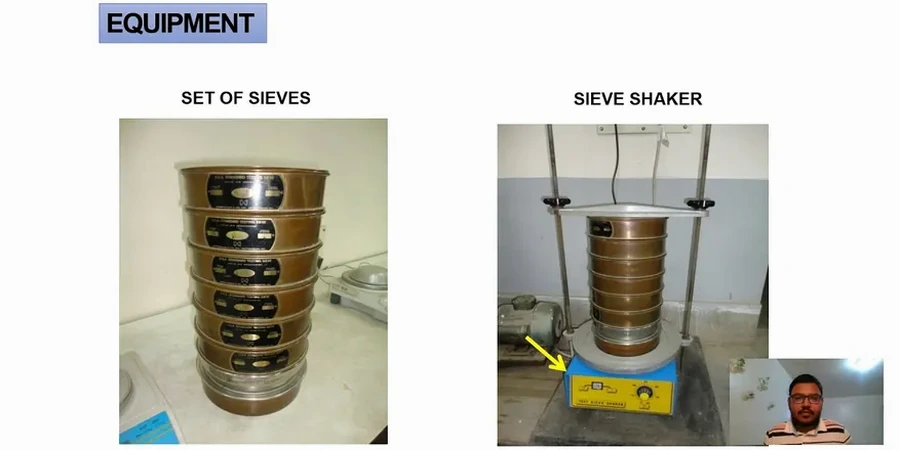
A complete gradation curve from sieve and hydrometer testing prevents over-design of drainage layers and under-estimation of settlement in Baton Rouge clays.
Method and coverage
Regional considerations
A four-story apartment complex near the LSU lakes went up last year. The geotechnical report showed lean clay with sand. The contractor placed a granular base without verifying fines content. After the first heavy rain, the base pumped water and the slab settled 2 inches. That was a grain size problem. The fines were higher than expected, clogging the drainage layer. A simple hydrometer test before construction would have caught the 18% clay fraction. In Baton Rouge, ignoring the silt-clay ratio is a direct path to differential settlement and water damage.
Process video
Standards that apply
ASTM D422-63 (2007) — Particle-size analysis of soils, ASTM D6913-17 — Sieve analysis (dry/wet), ASTM D7928-21 — Hydrometer method, AASHTO T-88 — Particle size analysis of soils
Associated technical services
Standard Sieve Analysis
Dry sieving from 3 inch down to No. 200. Suitable for granular fills, base courses, and sands. Turnaround is 2 business days.
Complete Hydrometer Analysis
Full sedimentation test for soils with more than 10% fines. Includes dispersant calibration and temperature correction. Required for clay-rich Baton Rouge soils.
Combined Sieve + Hydrometer Package
Both methods run on the same sample. Produces a continuous gradation curve from gravel to clay. Recommended for foundation and pavement design.
Typical parameters
Common questions
What is the difference between sieve and hydrometer analysis?
Sieve analysis separates particles down to 75 microns (No. 200 sieve). Hydrometer analysis measures the settling velocity of particles smaller than 75 microns in a water column. Together they cover the full range from gravel to clay.
How much sample do you need for grain size analysis in Baton Rouge?
For a standard combined test we need about 500 grams of material. If the sample is mostly fine-grained, 100 grams is sufficient. We prefer field-moist samples to avoid altering the natural gradation.
How long does a full sieve and hydrometer test take?
The dry sieve portion takes one day. The hydrometer requires readings over 24 hours plus oven drying. Total turnaround is 3 to 4 business days for a complete report.
Do you accept samples collected by the contractor?
Yes. We accept third-party samples as long as they are properly labeled with depth, location, and date. We document the chain of custody per ASTM D422 requirements.
What does a typical grain size analysis cost in Baton Rouge?
A standard combined sieve and hydrometer test runs between US$110 and US$180 per sample. Volume discounts apply for projects with 10 or more samples.