I visited a site near the LSU lakes where a residential slab had lifted 4 inches in less than two years. The culprit was the high-plasticity clay that dominates the subsurface across Baton Rouge. We sampled the soil at three depths and ran Atterberg limits plus free-swell tests. The plasticity index hit 55, confirming the risk. Before any foundation design begins, we always pair the expansive soil evaluation with a classification of soils to confirm the clay type, and we use corte directo to measure shear strength under saturated conditions. That data drives the decision on whether to remove or treat the active clay zone.
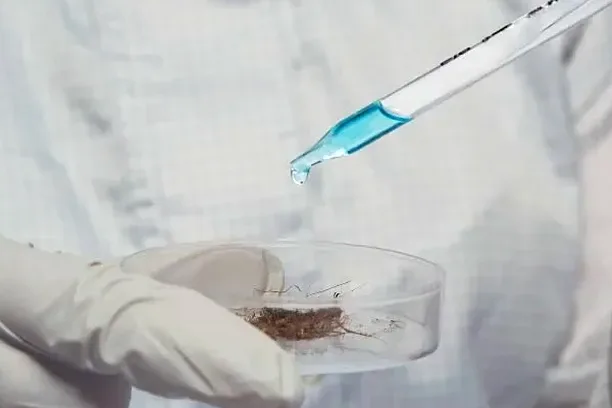
Baton Rouge clays can swell enough to lift a concrete slab 4 inches if the active zone is not properly identified.
Method and coverage
Regional considerations
In Baton Rouge, many builders still backfill with the same high-plasticity clay they excavated. That clay rehydrates during wet seasons and pushes against foundations. We have seen retaining walls tilt and driveways crack because nobody checked the swell potential of the fill. The biggest mistake is assuming all clays behave the same. A PI of 30 is manageable with proper drainage. A PI of 55 requires removal or chemical stabilization. We recommend a deep soil mixing program when the active zone exceeds 2 meters, because shallow replacement alone cannot stop the heave.
Standards that apply
ASTM D4318 (Atterberg Limits), ASTM D4546 (One-Dimensional Swell/Collapse), ASTM D2487 (Unified Soil Classification), IBC Chapter 18 (Foundation Design)
Associated technical services
Swell-Consolidation Testing
Oedometer tests to measure free swell, swell pressure, and collapse potential under design loads. We run multiple moisture conditions to simulate seasonal wet-dry cycles typical of Louisiana's humid subtropical climate.
Active Zone Mapping
Borehole logging and moisture content profiling to define the depth of seasonal moisture change. We correlate results with local rainfall data and tree-root presence to establish site-specific active zone limits for foundation design.
This service complements our laboratory testing work for a complete project analysis.
Typical parameters
Common questions
How deep should I excavate to remove expansive clay in Baton Rouge?
The active zone in Baton Rouge typically extends 1.5 to 3.0 meters below grade. We recommend sampling at 0.5 m intervals down to 4 m to confirm the depth where moisture content stabilizes. If the PI exceeds 50, consider full removal down to 2.5 m or apply lime stabilization.
What is the cost of an expansive soil evaluation in Baton Rouge?
A standard residential evaluation with three boreholes and full swell testing ranges from US$590 to US$1,680 depending on site access, number of samples, and required turnaround. Commercial projects with deeper borings and additional consolidation tests fall at the higher end.
Can I build a slab-on-grade on Baton Rouge clay without treatment?
Not recommended unless the swell pressure is below 20 kPa and the PI is under 30. Most Baton Rouge clays exceed these thresholds. A post-tensioned slab designed per PTI DC10.5 or a structural slab with void forms is required. We always run swell tests before waiving any treatment.