Too many construction teams in Baton Rouge assume the soil beneath their site behaves like the alluvial deposits found near the Mississippi River. That assumption can lead to serious foundation problems. Residual soils, formed in place from weathered bedrock, have a completely different structure and engineering behavior. They often contain clay minerals that swell, shrink, or lose strength when wet. Without proper characterization, a slab-on-grade can crack within months. The key is to identify the soil's origin, grain-size distribution, and plasticity before pouring a single cubic yard of concrete. That is where a thorough residual soil characterization becomes essential for any project in Baton Rouge.
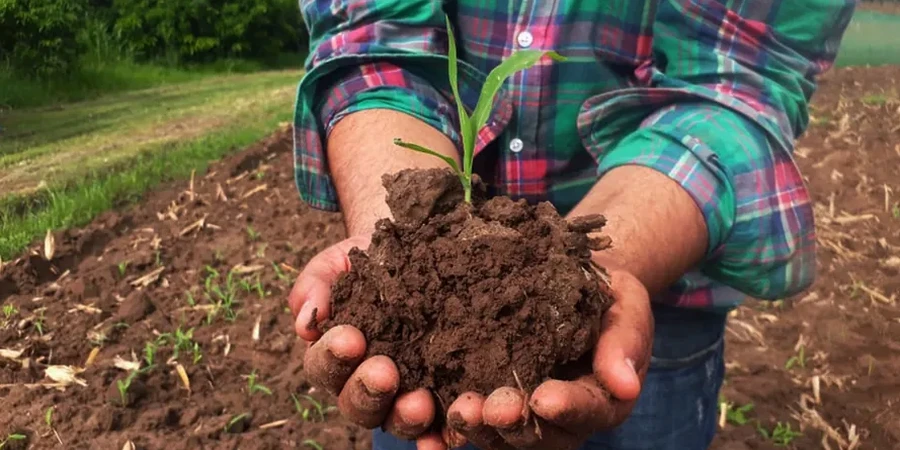
Residual soils in Baton Rouge can lose up to 60% of their bearing capacity when saturated. Characterize them early.
Method and coverage
Regional considerations
A 10-story apartment complex near Perkins Road was designed using SPT blow counts from the dry season. The residual clay layer had an N-value of 15 blows/ft in July, but after a week of heavy rain the same soil softened to N-values below 5. The structural engineer had to redesign the mat foundation, adding 18 inches of thickness and delaying the project by three months. That is the hidden risk of residual soils in Baton Rouge. Their engineering properties change with moisture content much more dramatically than transported soils. A proper characterization program must include wet-season sampling and remolded strength testing to prevent this kind of costly surprise.
Standards that apply
ASTM D2487-17 (USCS classification), ASTM D4318-17 (Atterberg limits), ASTM D6913-17 (sieve analysis), ASTM D2166-16 (unconfined compression)
Associated technical services
Laboratory Index Testing
Full suite of index tests including Atterberg limits, grain-size distribution, natural moisture content, and specific gravity. Results are reported with USCS classification per ASTM D2487. Suitable for preliminary design and fill characterization.
Field Sampling & In-Situ Moisture Monitoring
Thin-walled tube sampling (ASTM D1587) from test pits or borings to obtain undisturbed specimens. Combined with in-situ moisture content logging over multiple seasons to capture the wet-dry cycle typical of Baton Rouge's humid subtropical climate.
Typical parameters
Common questions
How is residual soil different from alluvial soil in Baton Rouge?
Residual soil forms in place from weathered bedrock and retains the parent rock's structure, while alluvial soil is deposited by water and tends to be layered. Residual clays in Baton Rouge often have higher plasticity and more variable strength with moisture than the silty sands found along the Mississippi River.
What is the typical cost for residual soil characterization in Baton Rouge?
The cost ranges between US$890 and US$2,950 depending on the number of test pits, laboratory tests required, and whether seasonal moisture monitoring is included. A basic index-test package for one borehole is at the lower end; a full program with tube sampling and plasticity tests is at the higher end.
Which ASTM standards apply to residual soil testing?
The primary standards are ASTM D2487 for classification, ASTM D4318 for Atterberg limits, and ASTM D6913 for grain-size analysis. For undisturbed sampling we follow ASTM D1587. The laboratory should hold ISO 17025 accreditation for these methods.
How long does a complete characterization take?
Field sampling can be completed in one to two days for a typical residential lot. Laboratory testing takes another five to seven business days. If seasonal moisture monitoring is required (recommended for high-PI clays), the program may extend over several months.
Can residual soil characterization help with pavement design?
Yes. The plasticity index and percent fines directly influence the subgrade support value (MR) used in AASHTO pavement design. A CH soil with PI over 40 will require stabilization or a thicker base course. Characterization data prevents under-design and premature pavement failure.