In Baton Rouge, we often see road failures start not with the pavement but with water trapped beneath it. Our team focuses on geotechnical road drainage as the first line of defense. The city's high water table and clay-rich soils make surface and subsurface water control critical. Without proper drainage, pore pressures rise and bearing capacity drops. We integrate field permeability tests with a full study of soil mechanics to map how water moves through the profile. That data directly informs trench depth, pipe sizing, and outlet design. We also check for perched water tables that can saturate the subgrade weeks after a storm. Getting drainage right from the start saves roads from premature cracking and rutting.
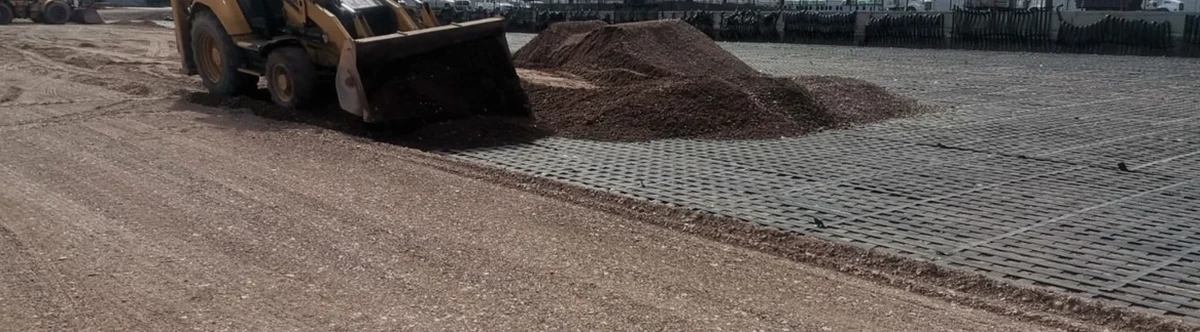
In Baton Rouge, road failures often start with trapped water, not weak pavement — drainage is the real foundation.
Method and coverage
Regional considerations
Compare the south side of Baton Rouge near the levee with the northern industrial corridor. Near the Mississippi, silty sands drain relatively fast. Up north, heavy clay deposits hold water for weeks. That difference changes everything for road drainage. In clay zones, we see edge drains clog within months if not wrapped in a proper geotextile. The bigger risk is hydrostatic uplift on pavement slabs during a 100-year flood. When the water table rises above the base course, the road loses all confinement and cracks under traffic. We always run consolidation and permeability tests before writing the drainage specs for those areas.
Standards that apply
ASTM D2434 (permeability of granular soils), FHWA NHI-05-037 (road drainage design), ASTM D4751 (geotextile opening size)
Associated technical services
Subsurface drainage design
We size pipe networks, compute flow rates, and select filter fabrics based on soil gradation and groundwater data.
Permeability testing
In-situ falling head tests and lab constant head tests measure how fast water moves through each soil layer.
Erosion and sediment control
We design check dams, silt fences, and outlet protection to prevent scour during construction and operation.
Long-term monitoring
Piezometers and flow meters track water levels and discharge rates over multiple wet seasons to validate performance.
This service complements our laboratory testing work for a complete project analysis.
Typical parameters
Common questions
How deep should road drains be in Baton Rouge clay?
Typically 3 to 5 feet below the subgrade surface. Deeper trenches help intercept the water table before it reaches the base course. We confirm depth with a groundwater observation well during the site investigation.
What is the cost range for a geotechnical drainage study?
A standard investigation including test pits, permeability testing, and a design report runs between US$750 and US$2,540. The final cost depends on the number of test locations and the site's accessibility.
Do I need a drainage study for a residential road?
Yes, especially in Baton Rouge. Even a short street can fail if the subgrade stays wet. A drainage study identifies where water enters the pavement section and how to remove it economically.
How long does the field work take?
One to two days for a typical road segment. We drill test pits, install temporary piezometers, and run falling head tests. The lab analysis and report follow within five business days.