Baton Rouge sits on the Mississippi River floodplain with a high water table that shifts with river stage and seasonal rains. The city averages about 60 inches of rain per year, and that moisture has to go somewhere. Poor drainage design here can saturate subgrades, soften bearing layers, and trigger differential settlement. Our team evaluates soil permeability, groundwater depth, and seepage paths to design systems that actually work in these wet conditions. Before finalizing any drainage layout we often combine this work with a permeability field test to confirm infiltration rates and with soil classification to identify problematic clays. Both steps give us the real data we need for Baton Rouge.
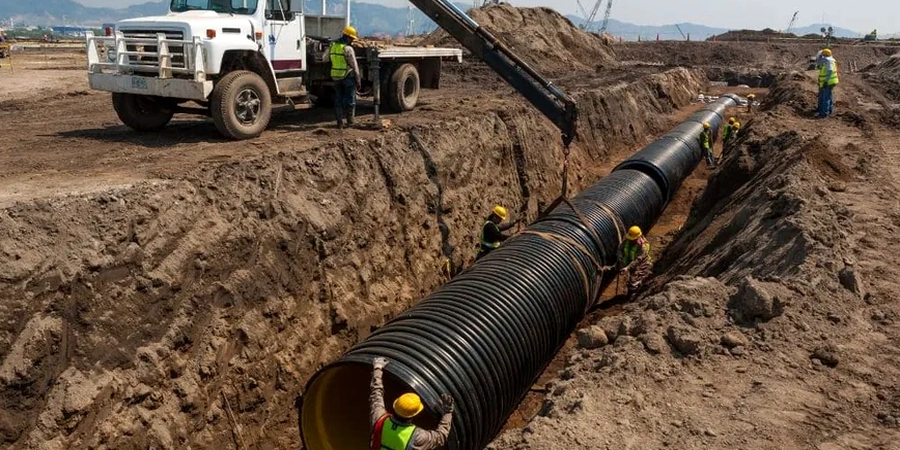
Water is the main cause of subgrade failure in Baton Rouge. Design drainage for slow-draining silty clays, not sand.
Method and coverage
Regional considerations
Baton Rouge has a population of roughly 225,000 and sits at an elevation of only about 50 feet above sea level. The flat terrain and high water table mean that even a moderate 4-inch rain can leave standing water for days if drainage is undersized. We have seen slab-on-grade floors crack, retaining walls tilt, and pavement subgrades soften because a geotechnical drainage design was either skipped or guessed at. Ignoring drainage in this city is a direct path to moisture-driven damage that costs far more to fix than the design itself.
Standards that apply
ASCE 7-22 (rain load and drainage), IBC 2021 Chapter 18 (subsurface drainage), ASTM D2434 (constant head permeability)
Associated technical services
Subsurface Drainage Design
We design French drains, curtain drains, and sump systems based on measured groundwater levels and soil hydraulic conductivity. The report includes drain depth, spacing, pipe diameter, and filter aggregate specs.
Surface Drainage & Grading Plans
For commercial and residential sites, we optimize swales, inlets, and culvert sizing to match Baton Rouge rainfall intensities. We also check for ponding risk near foundations and retaining walls.
Typical parameters
Common questions
Why is drainage design so important in Baton Rouge?
The city's high water table and slow-draining silty clays mean that without proper design, water accumulates under slabs and pavements. That leads to softening, heave, and eventual structural damage.
What tests do you run for a drainage design?
We run falling-head and constant-head permeability tests, measure groundwater depth, classify the soil per ASTM D2487, and sometimes do a CBR test on the soaked subgrade to check strength loss.
How much does a geotechnical drainage design cost in Baton Rouge?
For a typical residential or small commercial site, the design and field testing range between US$750 and US$2,530. The exact cost depends on the number of test pits and the complexity of the drainage network.