The Mississippi River floodplain deposits beneath Baton Rouge create a complex soil profile dominated by silty clays and sands that shift dramatically across short distances. For pavement design and subgrade evaluation, the laboratory CBR test becomes a critical baseline measurement — it directly quantifies the California Bearing Ratio of compacted soil samples under controlled moisture conditions. This data feeds into AASHTO pavement thickness calculations and helps engineers decide whether stabilization is needed before placing base layers. In Baton Rouge, where the water table sits close to the surface, combining CBR results with a geotechnical drainage study can prevent premature road failures. The test follows ASTM D1883 and AASHTO T-193 protocols, ensuring reproducibility across projects.
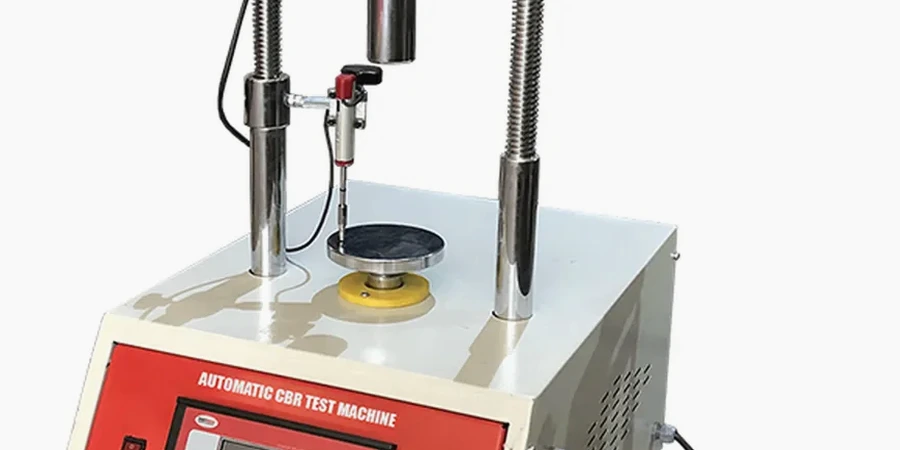
A soaked CBR below 5% in Baton Rouge clays means the subgrade will likely require chemical stabilization or a thicker granular base.
Method and coverage
Regional considerations
We use a calibrated mechanical press with a 50 kN load cell for the CBR penetration test — the same equipment used in dozens of Baton Rouge road projects. The operator monitors the load-deformation curve in real time to catch any anomalies. A common issue in local soils is the presence of organic matter or silt pockets that cause erratic readings. To avoid this, we always run duplicate samples and check for consistency. If the scatter exceeds 10%, we repeat the compaction and testing sequence. This diligence prevents underpredicting the required pavement thickness, which could otherwise lead to rutting or alligator cracking within two to three years on a busy Baton Rouge arterial road.
Standards that apply
ASTM D1883-21 (Standard Test Method for CBR of Laboratory-Compacted Soils), AASHTO T-193-22 (Standard Method of Test for CBR of Compacted Soils), IBC 2021 Chapter 18 (Soils and Foundations), Louisiana DOTD TR 418 (CBR test procedure)
Associated technical services
Standard Soaked CBR
Four-day soaked test at optimum moisture content. Includes swell monitoring and load-penetration curve. Ideal for flexible pavement design per AASHTO 1993.
Unsoaked CBR
Quick turnaround — results in 24 hours. Suitable for preliminary screening or when the subgrade will remain unsaturated during service.
CBR with Swell Measurement
Extended swell monitoring up to 7 days for high-plasticity clays. Critical for Baton Rouge sites with PI > 30.
CBR on Undisturbed Samples
Testing on thin-walled tube samples or block samples. Provides in-situ condition assessment for existing subgrades.
Typical parameters
Common questions
How much does a laboratory CBR test cost in Baton Rouge?
The typical cost ranges from US$120 to US$200 per sample, depending on whether it is soaked or unsoaked and whether swell monitoring is included. Bulk discounts apply for 10+ samples from the same project.
What CBR values are typical for Baton Rouge soils?
Native Mississippi River silty clays usually yield soaked CBR values between 2% and 8%. Sandy deposits near the river can reach 15% to 20%. Organic clays in swampy areas often fall below 3%.
How long does the soaked CBR test take?
The soaking period is 96 hours (4 days), plus 1-2 days for compaction and penetration testing. Total turnaround is about 5 to 6 business days from sample receipt.
Do I need a soaked or an unsoaked CBR test?
For pavement design in Baton Rouge, we always recommend the soaked test because the high water table and heavy rainfall saturate the subgrade seasonally. Unsoaked is only used for temporary roads or dry-condition screening.