Baton Rouge sits on the Mississippi River floodplain, where high plasticity clays and silty soils dominate the subsurface. The water table often sits within three feet of the surface, which directly influences rigid pavement design. A concrete slab on such ground must account for volume changes and poor drainage. We combine site-specific CBR testing with plate load verification to set accurate slab thickness. Before final design, we recommend a CBR vial to assess subgrade strength under soaked conditions. That data drives joint spacing and steel reinforcement requirements for long-term performance.
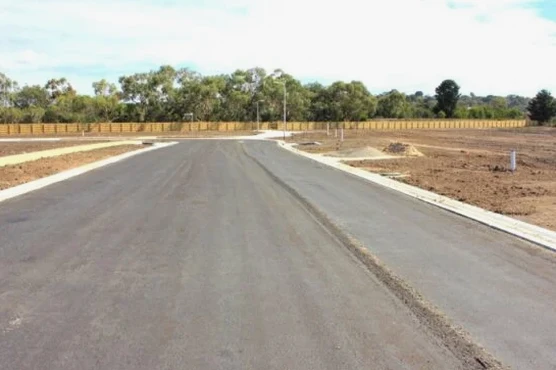
A rigid pavement in Baton Rouge can last 30 years if the subgrade is properly stabilized and the water table is managed with underdrains.
Method and coverage
- Subgrade modulus (k-value) determination via plate load tests
- Concrete flexural strength verification per ASTM C78
- Joint layout optimization for local temperature swings
Regional considerations
Baton Rouge expanded rapidly after the 1950s, filling low-lying areas with uncontrolled fill. That legacy means many sites have variable compaction and hidden organic pockets. Rigid pavement design must address the risk of differential settlement at fill-native soil interfaces. We require a minimum of two borings per pavement segment and check for sulfate attack on concrete in the high-sulfate soils found near the industrial corridor. Ignoring these conditions leads to corner cracking and pumping at joints within the first five years.
Standards that apply
AASHTO Guide for Design of Pavement Structures (1993), ASTM D1196 (Plate Load Test for k-value), ACI 325 (Concrete Pavement Design)
Associated technical services
Subgrade Evaluation & Stabilization
CBR tests, plate load testing, and soil classification to determine k-value. We recommend lime or cement stabilization when plasticity index exceeds 20. Includes drainage design to keep the subgrade dry.
Structural Pavement Design
Thickness design using the AASHTO 1993 method, joint layout, dowel and tie bar sizing, and concrete mix design for flexural strength. We produce construction-ready drawings and specifications.
This service complements our laboratory testing work for a complete project analysis.
Typical parameters
Common questions
What makes rigid pavement design different in Baton Rouge compared to other cities?
High water tables and expansive clays are the main challenges. The subgrade modulus (k-value) is lower than in drier regions, so slabs need more thickness or a stabilized base. Drainage is critical because standing water under the slab can cause pumping and faulting.
How much does rigid pavement design typically cost for a commercial project in Baton Rouge?
For a typical commercial parking lot or access road, engineering design fees range between US$2,020 and US$6,620. This includes soil testing, structural calculations, and ready-to-bid drawings. Large industrial projects with heavy truck traffic may exceed that range.
What soil tests are required before starting rigid pavement design?
We recommend at least one CBR test per 2,000 sq ft of pavement area, plus Atterberg limits and natural moisture content. For high-traffic areas, a plate load test to determine the modulus of subgrade reaction (k-value) is essential. These tests follow ASTM D1883 and ASTM D1196.
Can you design a rigid pavement for a site with known sinkhole risk in Baton Rouge?
Yes. We incorporate a geophysical survey (GPR or MASW) to detect voids before design. The pavement structure then includes a reinforced concrete slab with continuous steel and a geogrid layer to bridge any small cavities. This adds cost but prevents catastrophic failures.