In Baton Rouge, the Mississippi River floodplain creates deep alluvial deposits of soft clay and silt. That makes landfill geotechnics more challenging than in many other Gulf Coast cities. We have designed liner systems over these compressible soils for decades. Before any cell construction, we run consolidation tests and slope stability analyses to predict long-term settlement. For example, at a recent municipal site near the Comite River, we combined drenes verticales with staged loading to accelerate consolidation. The key is understanding how the high water table interacts with waste loads. Our team uses field vane shear and piezocone tests to measure undrained shear strength in situ. Without this data, differential settlement can tear the geomembrane liner within the first year.
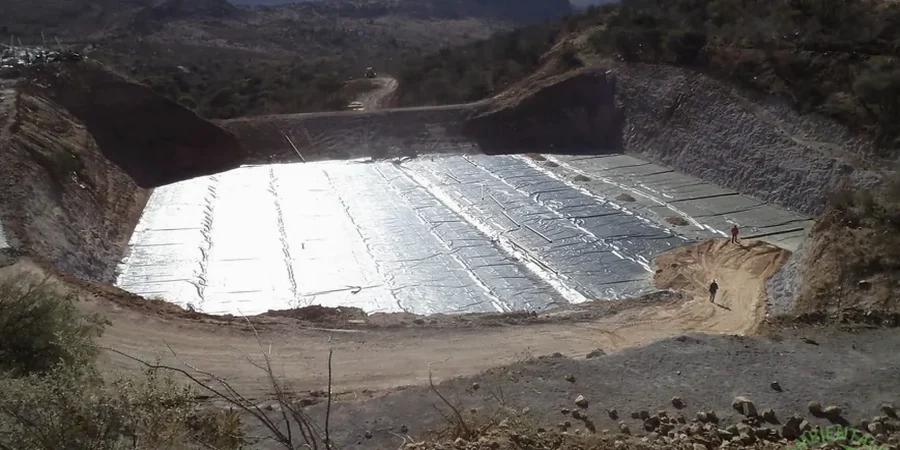
A landfill liner that fails in its first year due to differential settlement is a failure we could have prevented with proper consolidation testing.
Method and coverage
Regional considerations
A landfill cell we evaluated near Plaquemine had a 4-meter thick layer of soft organic clay under the proposed base. The owner had planned a simple clay liner without deep improvement. We ran consolidation tests and found the primary settlement would exceed 1 meter over 20 years. That would rupture the geomembrane and create leachate seeps. We recommended a wick drain system combined with a surcharge load of 6 meters of fill. The client accepted the redesign, and after 18 months of preloading, the settlement rate dropped to under 2 cm per year. That is the kind of site-specific adjustment that makes landfill geotechnics in Baton Rouge a non-negotiable step for any new cell.
Process video
Standards that apply
ASTM D1586 (SPT), ASTM D698 (Proctor compaction), IBC Chapter 18 (Soils and Foundations), ASCE 7 (Minimum Design Loads)
Associated technical services
Liner System Design & Testing
Design of compacted clay liners and composite systems with geomembranes. We conduct compaction tests, hydraulic conductivity measurements, and interface shear testing to ensure compliance with EPA Subtitle D requirements.
Settlement & Slope Stability Analysis
We model long-term settlement of waste and foundation soils using consolidation theory and finite element methods. Slope stability analyses cover both static and seismic conditions per ASCE 7, including pseudo-static methods.
Typical parameters
Common questions
Why is landfill geotechnics different in Baton Rouge compared to other regions?
Baton Rouge sits on the Mississippi River alluvial plain, where soft clays and silts extend up to 30 meters deep. The high water table and low shear strength of these soils require special consideration for liner support and gas collection. Landfill geotechnics here must account for significant consolidation settlement that can reach over a meter in the first decade.
What is the typical cost range for a landfill geotechnical investigation in Baton Rouge?
For a standard municipal cell of about 10 acres, the investigation and design work typically falls between US$2,130 and US$8,420. This includes borings to 30 meters, laboratory testing, settlement analysis, and a liner design report. The range depends on the number of borings, soil variability, and whether gas extraction design is included.
How do you prevent liner failure from differential settlement?
We design a foundation improvement program tailored to the site. This often involves wick drains with surcharge loading to accelerate consolidation before liner installation. We also specify a geomet drainage layer to distribute any remaining differential movement. During construction, we monitor settlement plates weekly and adjust the fill sequence if needed.
Do you consider seismic loading for landfill slopes in Baton Rouge?
Yes. Louisiana is in a moderate seismic zone, so we run pseudo-static stability analyses per ASCE 7. The peak ground acceleration for Baton Rouge is about 0.15g. We check both the waste mass and the foundation soils for liquefaction potential. If loose sand layers are present, we recommend densification through dynamic compaction or vibroflotation.