Working in Baton Rouge, we deal with the Mississippi River's ancient floodplain deposits on a daily basis. The soil profile here is a layered sequence of soft clays, silts, and loose sands that can change dramatically within a few meters. That variability is the main reason we insist on a detailed geotechnical analysis for soft soil tunnels before any design work begins. The city's high water table, often sitting just two to three meters below the surface, adds another layer of complexity. In our experience, skipping a thorough investigation in this region leads to cost overruns and schedule delays that could have been avoided. Before we even discuss advanced numerical modeling, we first conduct a comprehensive study of soil classification to understand the material's behavior under tunnel loading conditions.
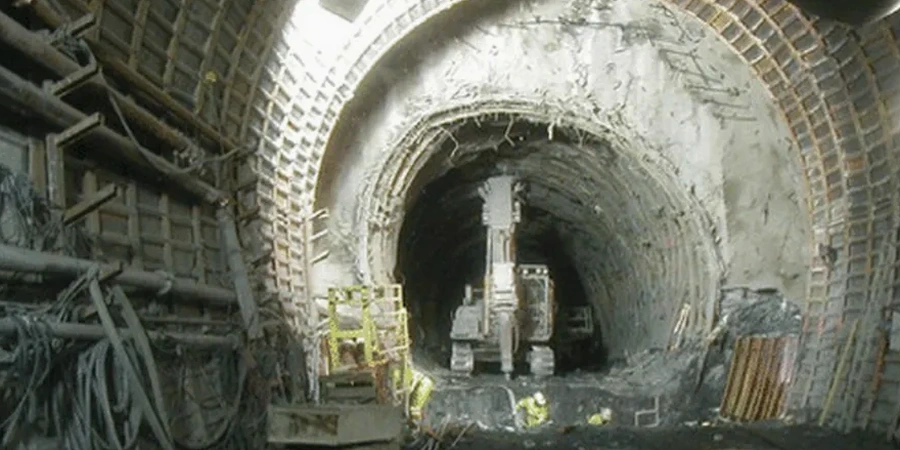
The soft alluvial clays in Baton Rouge can have undrained shear strengths as low as 10 kPa, requiring careful face support and settlement control during tunnel excavation.
Method and coverage
Regional considerations
The humid subtropical climate of Baton Rouge means the water table rarely fluctuates more than a meter throughout the year. That constant saturation keeps the soft soils in a near-critical state. During tunnel excavation, the risk of face instability is magnified by the low undrained shear strength and the potential for sudden groundwater inflow. We have seen cases where inadequate dewatering combined with rapid excavation rates caused large ground losses at the tunnel face. The presence of organic soils and peat lenses in some areas further complicates the behavior, as these materials exhibit high compressibility and creep. A proper geotechnical analysis for soft soil tunnels in Baton Rouge must account for these local conditions to avoid catastrophic failure.
Standards that apply
ASCE 7-22 (Minimum Design Loads and Associated Criteria for Buildings and Other Structures, Site Class F criteria), ASTM D1586-18 (Standard Test Method for Standard Penetration Test and Split-Barrel Sampling of Soils), ASTM D4767-11 (Standard Test Method for Consolidated Undrained Triaxial Compression Test for Cohesive Soils), FHWA-NHI-14-007 (Technical Manual for Design and Construction of Road Tunnels — Civil Elements)
Associated technical services
Advanced Laboratory Testing for Soft Soils
We perform triaxial CU/CU, oedometer consolidation, and direct simple shear tests on undisturbed samples to characterize the stress-strain and strength behavior of Baton Rouge's alluvial clays and silts.
In-Situ Seismic and CPT Profiling
Our team deploys MASW surveys and seismic CPT soundings along the tunnel alignment to map Vs30 profiles, evaluate liquefaction potential, and identify soft soil zones requiring Improvement.
Typical parameters
Common questions
What makes Baton Rouge's soil particularly challenging for soft soil tunnels?
The Mississippi River delta deposits create a highly variable profile of soft clays, silts, and loose sands with a shallow water table. Undrained shear strengths can drop below 10 kPa, and the constant saturation keeps soils near their liquid limit. Combined with the potential for liquefaction during seismic events, these conditions demand a site-specific geotechnical analysis for soft soil tunnels rather than relying on regional correlations.
How much does a geotechnical analysis for soft soil tunnels cost in Baton Rouge?
For a typical tunnel project in Baton Rouge, the cost ranges between US$4.450 and US$15.810 depending on the number of borings, CPT soundings, laboratory tests, and the length of the alignment. The final quote depends on the scope of field work and the complexity of the soil profile.
What laboratory tests are essential for soft soil tunnel design in Baton Rouge?
We consider consolidated undrained triaxial tests, oedometer consolidation tests, and direct simple shear tests as essential. Index tests like Atterberg limits and natural water content help correlate strength parameters. The geotechnical analysis for soft soil tunnels must also include determination of preconsolidation pressure to estimate settlement magnitudes under tunnel loading.