Baton Rouge sits on the Mississippi River floodplain, where soils shift from soft alluvial clay to dense sand lenses within meters. The Mississippi River has deposited layers of silt and clay for thousands of years, creating variable bearing conditions. For any shallow foundation design in Baton Rouge, we start by evaluating the soil profile with borings and SPT testing per ASTM D1586. The key parameter is the allowable bearing capacity, which we derive from N-values and laboratory shear tests. In our experience, understanding the plasticity of the clay soils here is critical. We often recommend a study of expansive soils to identify shrink-swell zones before setting footings. That data directly influences foundation width and depth.
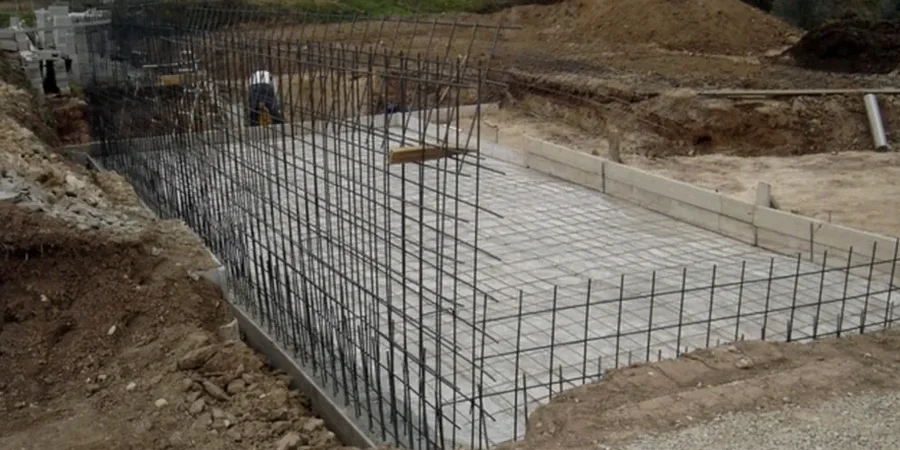
Baton Rouge clay near its liquid limit can lose half its bearing capacity after a wet season — we measure that before the foundation is poured.
Method and coverage
Regional considerations
The most common mistake we see in Baton Rouge is ignoring the perched water table after a storm. Contractors prepare a footing base in dry weather, then rain saturates the clay within hours. If the shallow foundation design does not include drainage provisions, the bearing capacity drops and the footing settles unevenly. We have documented cases where differential movement exceeded 50 mm because the soil softened under the edge of the footing. That is why we always recommend a drainage layer and a geotextile separator beneath the slab.
Standards that apply
ASTM D1586-18 (SPT), ASTM D4318-17 (Atterberg Limits), ASCE 7-22 (Minimum Design Loads)
Associated technical services
Bearing Capacity Analysis
We perform plate load tests and analyze N-SPT data to determine ultimate bearing capacity. Using Terzaghi's theory and local correlations, we calculate safe bearing values for spread footings and mats. The analysis includes settlement estimates for both immediate and consolidation phases.
Settlement and Differential Movement Assessment
We run oedometer tests on undisturbed samples from Baton Rouge clay layers to measure compression index and preconsolidation pressure. The output feeds into our settlement models, helping engineers decide whether to use a thicker mat or deeper footings to keep differential movement under 25 mm.
Typical parameters
Common questions
What is the typical bearing capacity for shallow foundations in Baton Rouge?
For spread footings on the native clay, allowable bearing capacity ranges from 80 to 180 kPa depending on moisture content and plasticity. Sand lenses can give higher values, up to 250 kPa, but we always verify with plate load tests.
How much does a shallow foundation design study cost in Baton Rouge?
The cost for a complete geotechnical investigation including borings, lab tests, and a bearing capacity report is between US$1,700 and US$3,160. The final price depends on the number of borings and the complexity of the soil profile.
What tests are essential for shallow foundation design in this region?
We run SPT per ASTM D1586, Atterberg limits, natural moisture content, and consolidation tests. For sites with high plasticity clay, we also recommend a swell test to evaluate potential heave under the footing.
How deep should a footing be in Baton Rouge clay?
Footings typically go to a depth of 0.9 to 1.2 meters to reach the stiffer clay layer below the seasonal moisture zone. In areas with thick organic deposits near the river, we may recommend a depth of 1.5 meters or a transition to deep foundations.