Baton Rouge sits on deep Mississippi River alluvial soils, so the subgrade here is mostly soft clay and silt with high moisture content. That makes flexible pavement design trickier than most engineers expect. Without proper characterization, you get rutting or fatigue cracking within a few seasons. We combine ensayo CBR with resilient modulus testing to capture how these low-strength soils behave under repeated loads. The local water table can be as shallow as 3 feet, which changes drainage assumptions entirely. A good pavement section must account for that or you are just guessing.
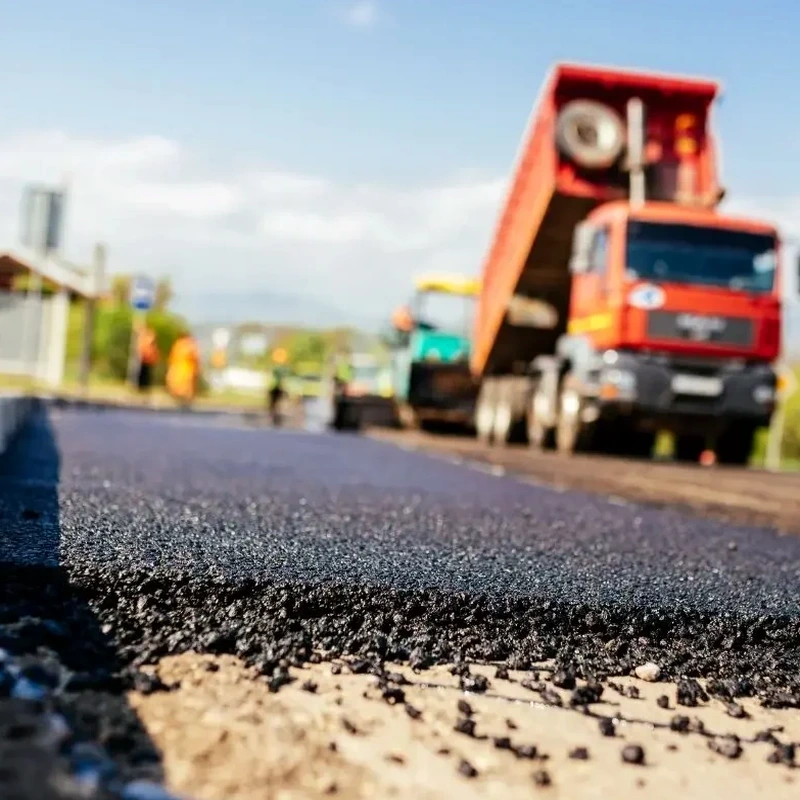
Baton Rouge subgrade soils can lose 50% of their support when saturated. Design for wet conditions or plan for premature failure.
Method and coverage
- Resilient modulus (Mr) from repeated load triaxial tests
- In-situ density and moisture profiles
- Structural number calculations per AASHTO
- Fatigue life estimation for asphalt layers
Regional considerations
ASCE 7 and IBC require site-specific soil parameters for pavement design when the subgrade CBR falls below 5. In Baton Rouge, that is the norm, not the exception. Ignoring it leads to differential settlement at utility trenches and edge cracking near curb lines. The risk multiplies in zones with high groundwater, where pore pressures reduce effective stress under traffic loads. We always include a drainage analysis and recommend subrasante vial treatment when subgrade strength is borderline.
Standards that apply
AASHTO Guide for Design of Pavement Structures (1993), AASHTO T-206 (SPT), ASTM D1586-18, ASCE 7-22 (geotechnical provisions)
Associated technical services
Subgrade Investigation & CBR Testing
In-situ CBR, soaked CBR, and resilient modulus determination for each pavement layer. We map spatial variability across the site to avoid weak spots.
Structural Section Design
Layer thickness optimization using AASHTO 1993 and MEPDG. We calculate structural numbers and recommend asphalt, base, and subbase thicknesses.
Drainage & Moisture Control
Water table depth measurement, permeability testing, and design of subdrains or edge drains to keep the pavement section dry year-round.
Typical parameters
Common questions
What is the typical subgrade CBR in Baton Rouge?
Soaked CBR values range from 3 to 8 for most alluvial clay sites. Drier locations near the bluff line can reach 10 to 12. We always test soaked because Baton Rouge gets heavy rainfall — the pavement will see saturated conditions.
What is the difference between flexible and rigid pavement design?
Flexible pavement distributes loads through layered asphalt and aggregate, relying on subgrade support. Rigid pavement uses a concrete slab that bridges weak spots. In Baton Rouge, flexible is more common for residential roads and parking lots because it handles differential settlement better.
How much does flexible pavement design cost in Baton Rouge?
The typical cost for a complete design package — including subgrade investigation, lab testing, and structural section calculations — ranges from US$1,920 to US$4,970 depending on site size and number of test locations.