Many Baton Rouge construction teams assume the soft Mississippi River alluvium is uniform, so they skip shear wave velocity profiling entirely. That assumption leads to over-designed foundations or, worse, structures that don't match the actual soil stiffness profile. In a city where the subsurface transitions from silty clays to dense sands within meters, relying on standard penetration resistance alone misses the stiffness contrast that controls seismic response. MASW (Multichannel Analysis of Surface Waves) measures shear wave velocity directly across the top 30 meters, giving us the VS30 value needed for ASCE 7 site class assignment. Before finalizing the foundation layout, we often pair this survey with a calicatas exploratorias to validate soil stratigraphy at critical depths, and with ensayo SPT boreholes for direct strength correlation.
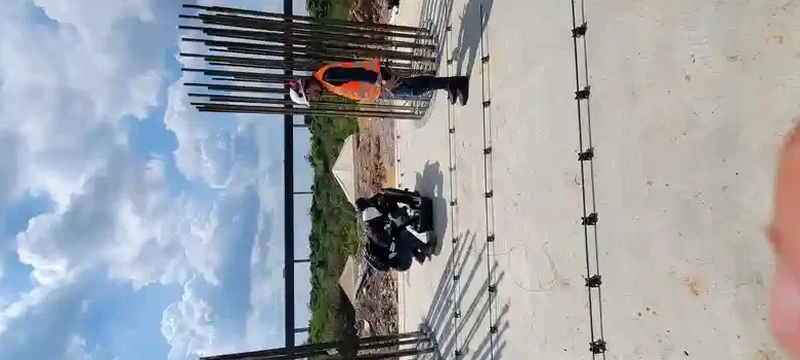
VS30 from MASW directly controls the seismic site coefficient Fa and Fv in ASCE 7-22, affecting base shear calculations by up to 40% in Baton Rouge soft soils.
Method and coverage
- VS30 value in m/s for seismic site class per ASCE 7
- Layer-by-layer shear wave velocity profile
- Poisson's ratio derived from Vp/Vs ratio
- Estimated small-strain shear modulus (Gmax)
Regional considerations
Baton Rouge sits at an elevation of about 14 meters above sea level, with the Mississippi River forming a natural hazard boundary. The 1811–1812 New Madrid earthquakes produced liquefaction and ground failure as far south as Baton Rouge, and modern probabilistic seismic hazard maps still show a peak ground acceleration of 0.15 g for this region. Without a measured VS30 profile, engineers default to conservative site coefficients that inflate seismic loads unnecessarily, or worse, underestimate them in areas where soft clay amplifies long-period shaking. Our MASW survey resolves that uncertainty with site-specific stiffness data.
Standards that apply
ASTM D4428/D4428M-14 — Standard Test Methods for Crosshole Seismic Testing, ASCE 7-22 — Minimum Design Loads and Associated Criteria for Buildings (Chapter 20), NEHRP Recommended Seismic Provisions (FEMA P-1050) — Site Class Definitions
Associated technical services
MASW Survey with VS30 Report
Full 2D MASW acquisition along one or two lines, processed to deliver a 1D shear wave velocity profile and certified VS30 value. Includes site class assignment per ASCE 7 and a layer stiffness summary. Suitable for commercial buildings, schools, and residential subdivisions in Baton Rouge.
MASW + Borehole Correlation Package
Combines MASW with at least one SPT boring at the same location to calibrate shear wave velocity against direct N-values and soil classification. Provides a cross-validated stiffness profile, Poisson's ratio estimates, and small-strain modulus Gmax. Ideal for critical facilities like hospitals and bridges where design relies on both strength and stiffness.
Typical parameters
Common questions
What is VS30 and why does it matter for Baton Rouge construction?
VS30 is the average shear wave velocity in the top 30 meters of soil. It determines the seismic site class (A through F) per ASCE 7, which directly affects the design spectral acceleration. Baton Rouge's alluvial soils often produce VS30 values below 360 m/s, placing them in Site Class D or E, which amplifies earthquake shaking relative to rock sites.
How deep does the MASW survey penetrate in Baton Rouge soils?
With our standard 24-geophone array at 2-meter spacing, the MASW survey resolves the shear wave velocity profile down to 30 meters, meeting the VS30 requirement. In areas with very soft clay layers that attenuate high frequencies, we may extend the array to 48 meters to capture deeper contrasts.
What is the cost range for a MASW / VS30 study in Baton Rouge?
A typical MASW survey with VS30 report ranges between US$1,930 and US$3,520 depending on the number of lines, site accessibility, and whether borehole correlation is included. For a single line with basic reporting, expect the lower end; multi-line projects with SPT calibration fall at the higher end.
Can MASW replace conventional boreholes for seismic design?
MASW alone cannot replace boreholes for strength parameters or soil classification, but it provides continuous stiffness profiling that boreholes cannot. The best practice in Baton Rouge is to use MASW as a screening tool to locate the most representative boring positions, then correlate the shear wave velocity profile with SPT N-values and Atterberg limits from the sampled borehole.
How long does a MASW survey take from field work to final report?
Field acquisition for a single 46-meter line takes about half a day. Data processing and inversion require two to three business days, and the final report including VS30, site class, and layer stiffness table is delivered within five business days from field completion.