Baton Rouge sits on thick Mississippi River alluvial deposits, with high groundwater and soft clays near the surface. Many local engineers overlook how geotextile specification must match these wet, compressible conditions. A woven geotextile with the wrong apparent opening size can clog within months. Before selecting a fabric, a thorough site investigation including a test pit program reveals soil layering and water tables. We also rely on field permeability tests to confirm drainage rates before finalizing the geotextile grade.
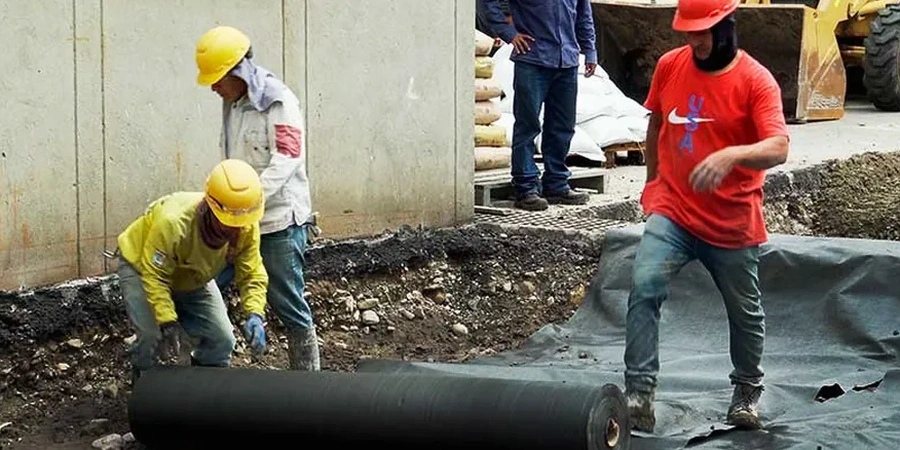
A mismatched geotextile in Baton Rouge clay can fail in one wet season, undermining the entire fill section.
Method and coverage
- Grab tensile strength (ASTM D4632)
- Apparent opening size (ASTM D4751)
- Permittivity (ASTM D4491)
- UV resistance for exposed applications
Regional considerations
A common mistake in Baton Rouge is selecting a geotextile based solely on cost. Contractors sometimes install a lightweight fabric that cannot handle the construction loads. The result: the geotextile tears during fill placement, and the clay mixes with the aggregate. Within a year, differential settlement appears. The real risk is that the repair costs far exceed the savings on fabric. A proper geotextile specification accounts for installation stress, long-term clogging potential, and the high plasticity of local soils.
Standards that apply
ASTM D4632 (Grab Tensile), ASTM D4751 (AOS), ASTM D4491 (Permittivity), AASHTO M288 (Geotextile Specification for Highway Applications)
Associated technical services
Site-Specific Fabric Selection
Review of soil logs and drainage data to recommend the exact geotextile type, weight, and opening size for your project.
Installation QA/QC
Field inspection during geotextile placement to ensure overlap, anchorage, and seam integrity meet specification requirements.
Laboratory Verification Testing
Third-party testing of fabric samples to confirm grab strength, permittivity, and AOS match the approved submittal.
This service complements our laboratory testing work for a complete project analysis.
Typical parameters
Common questions
What geotextile type works best for Baton Rouge soft clay?
A high-strength nonwoven geotextile (minimum 200 lb grab tensile) with permittivity above 0.05 sec⁻¹ typically performs best. The open structure prevents clogging while providing separation from the clay.
How much does a geotextile specification service cost in Baton Rouge?
For a typical project, the engineering review and specification development ranges between US$480 and US$1,160 depending on site complexity and number of test locations.
Do I need a geotextile if the fill is already granular?
Even with granular fill, a geotextile prevents migration of fines upward from the clay subgrade. Without it, traffic loading pumps clay particles into the aggregate, reducing drainage and causing premature failure.